


There are two types of people at the gym: the ones who take off every piece of jewelry before a workout, and the ones who forget they're even wearing it. If you're in the second group, you've probably wondered at some point: Can I actually wear jewelry while working out?
The short answer we can give you is yes, but only if you're wearing the right jewelry. Not all metals are built for sweat, movement, and daily wear. Some pieces start fading after a few workouts. Others leave green marks, lose their shine, or become uncomfortable the second you start moving. The best workout jewelry is made from sweat-proof, lightweight, and hypoallergenic materials like 18K gold PVD-plated stainless steel, solid gold, or silicone.
The best workout jewelry doesn't require a second thought. It can handle sweat, workouts, errands, coffee runs, and everything in between. Here's the truth on what to wear, what to avoid, and why the material matters more than most people realize when you go to work out.
1. Stud earrings
-
Best for: Weightlifting, HIIT, running, Pilates, everyday wear
- Why they're gym-safe: They sit close to the ear with no dangling parts that can snag, bounce, or pull on your lobe.
If workout jewelry had an MVP, it would probably be stud earrings. They're small, secure, and stay exactly where they're supposed to. They’re not swinging or catching on your clothing. And, most importantly, no accidental tugs while adjusting your ponytail. That's what makes them one of the easiest jewelry trends to wear during virtually any workout.


2. Huggie and small hoops
-
Best for: Running, spin, Pilates, walking
- Why they're gym-safe: Their close-fitting design prevents bouncing and minimizes the risk of getting caught on clothing or equipment.
Love hoops but don't want them flying around during spin class? That's where your huggies come in.
Small hoops and huggie earrings give you the look of a hoop without the movement of a larger style. They stay close to the ear and feel secure throughout your workout, almost giving you the feeling that they’re not there. They're especially popular for people who want to go from gym to brunch without changing their jewelry and don’t particularly enjoy changing jewelry all the time.


3. Short chain necklace
-
Best for: Walking, day-to-night wear
- Why it's gym-safe: Shorter chains create less movement, and fixed pendants don't slide around or repeatedly hit your chest while exercising.
A necklace can absolutely work at the gym if it's the right length. The biggest mistake people make is wearing long chains that bounce against their chest during cardio. After a few miles, that gets annoying fast.
Instead, look for a short chain necklace with a fixed pendant or simple design that stays in place. The goal is movement without distraction. This one also works for everyday wearing, you can easily go from workout to work in this necklace.


4. Signature bangle
-
Best for: Yoga, walking, errands, day-to-gym styling
- Why it's gym-safe: Smooth designs without dangling charms stay comfortable during low-impact movement.
A simple bangle can be one of those pieces you put on once and forget about. For lower-impact activities like yoga, walking, or everyday activities, a well-made bangle adds polish without feeling bulky.


5. Lightweight bracelet stack
-
Best for: Pilates, barre, walking, everyday wear
- Why it's gym-safe: Lightweight pieces move naturally without feeling heavy or restrictive.
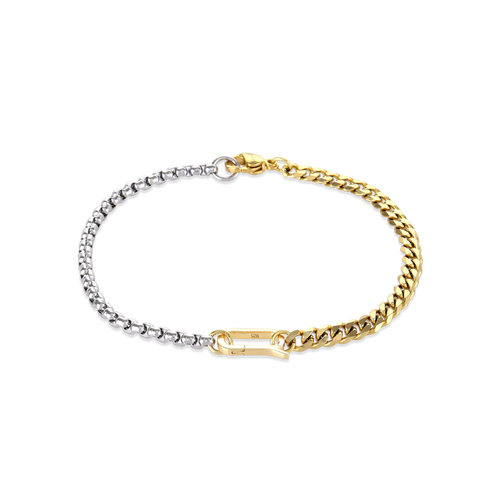
Not every bracelet stack needs to sound like a tambourine. Lightweight bracelets can add texture and personality without getting in the way of your workout. The key is keeping things simple and avoiding overly chunky styles to avoid them breaking while applying force. This is where thoughtful layering makes all the difference.


THE BUBBLE CURB CHAIN BRACELET STACK

THE BUBBLE CURB CHAIN BRACELET STACK
$ 175

6. Simple stackable rings
-
Best for: Yoga, walking, light cardio
- Why they're gym-safe: Minimalist designs are less likely to catch or snag.
We love rings, but this is where honesty matters. Simple stackable rings can work for yoga, walking, and light cardio. However, if you're doing serious weightlifting, it's usually best to remove them.
Heavy barbells and dumbbells can bend rings over time, and certain movements can create uncomfortable pressure on your fingers. For workouts, thin bands tend to perform much better than chunky statement rings.
One exception: Remove rings before heavy lifting whenever possible.


7. Anklets
-
Best for: Walking, cardio, swimming, vacations, everyday wear
- Why it's gym-safe: Positioned away from most workout equipment and less exposed to impact or snagging.
Anklets don't get enough credit. They're one of the easiest jewelry pieces to wear during workouts because they're naturally away from most equipment and high-friction areas. A quality anklet can move effortlessly through your treadmill sessions and your pool routine.



8. Ear cuffs
-
Best for: Gym-to-street styling, everyday wear, travel
- Why they’re gym-friendly: Ear cuffs are easy to slip off before training and put back on right after
Ear cuffs have become one of the easiest ways to add personality to a jewelry look. They create the appearance of a curated ear stack without requiring additional piercings, and they’re easy to remove when needed. For active lifestyles, that’s a win.


Why most jewelry can’t handle a workout
Sweat isn't just water. It's a mix of salt, minerals, and natural acids. Over time, that combination can be surprisingly tough on certain metals. That's why some jewelry starts changing color after a few workouts. You might notice green marks on your skin, fading gold color, peeling or flaking plating, tarnishing, and loss of shine.
Cheap base metals like brass and copper react more quickly to moisture and sweat. Thin plating can wear away faster when exposed to daily workouts. That's why material selection matters so much when you're looking for jewelry you can actually live in.
What makes jewelry sweat-proof
The secret isn't a special coating or cleaning product, It's the metal underneath within your mixed metal jewelry. If you're curious about how different finishes compare, our guide to gold-plated jewelry breaks it down in more detail.
Stainless steel (316L)
If there were a hero material for active lifestyles, it would be stainless steel. 316L stainless steel contains chromium, which creates a protective surface layer that helps resist corrosion and rust.
That means it can handle sweat, humidity, water exposure, and daily wear. It's also hypoallergenic and incredibly durable, making it one of the most practical choices for everyday jewelry. Artizan's jewelry is crafted with durable stainless steel bases specifically because of their strength, water resistance, and long-term wearability.
For anyone searching for reliable stainless steel jewelry, this is one of the biggest reasons the material continues to grow in popularity.
18K Gold-plated stainless steel & PVD
Not all gold-plated jewelry performs the same way. The difference comes down to what's underneath the gold. When gold plating is applied over stainless steel rather than a softer base metal, the finished piece becomes significantly more durable. Many modern pieces also use PVD technology, which helps create a stronger bond between the plating and the metal beneath it.
The result is jewelry that maintains its appearance far longer than traditional fashion jewelry.
What jewelry to avoid at the gym
Not every jewelry style is designed for movement and sweating, and are definitely pieces worth removing before your workout.
-
Chunky rings and heavy ring stacks: These can pinch, catch, and become uncomfortable during lifting sessions.
-
Oversized hoops and dangling earrings: Large earrings create unnecessary movement and can get caught on clothing or equipment.
-
Long necklaces: Anything that repeatedly bounces against your chest during cardio tends to become annoying quickly.
-
Brass, copper, and thin-plated jewelry: These materials are more likely to tarnish, discolor, or react with sweat.
Best workout jewelry by activity
Different workouts create different challenges, and a few tip or two will come in handy when you’re choosing your gym outfit.
|
Activity |
Wear |
Skip |
|
Weightlifting |
Stud earrings, fixed-pendant necklace, anklet |
Rings, bangles |
|
Running & Cardio |
Short chain necklace, studs, anklet |
Long necklaces, dangling earrings |
|
Yoga & Pilates |
Studs, thin rings, ear cuffs |
Heavy stacks, bulky pieces |
|
Spin & HIIT |
Huggies, studs, anklet |
Large hoops, noisy bracelet stacks |
|
Swimming |
Stainless steel studs, anklets, simple stainless steel pieces |
Brass, thin-plated jewelry, glued stones |
How to care for your workout jewelry
Even the best workout jewelry benefits from a little care. A few simple habits can help keep your favorite pieces looking their best. Even when jewelry is designed to handle sweat and water, consistent care helps preserve its shine for longer.
-
Rinse jewelry with fresh water after intense workouts.
-
Dry pieces thoroughly before storing them.
-
Store jewelry separately to prevent scratches.
-
Wipe away sunscreen, lotion, and product buildup regularly.
The best workout jewelry isn't necessarily the flashiest piece in your collection. It's the piece you never have to think about. That's why so many people are moving toward durable materials, go-to designs, and pieces that fit naturally into everyday life.
And if you're already embracing the freedom of wearing what feels right, you'll probably love the modern styling possibilities of mixed metal jewelry, too.
FAQs
Can you wear jewelry while working out?
Yes, but choosing the right jewelry makes all the difference. Pieces that sit close to the body, like stud earrings, huggies, short necklaces, ear cuffs, and anklets, tend to stay comfortable during movement and are less likely to snag on clothing or equipment. Material matters too.
Jewelry made from durable metals like stainless steel is designed to handle daily wear much better than softer or lower-quality metals. If you're doing high-impact workouts or heavy lifting, it's still a good idea to remove pieces that could pinch, bend, or get caught.
Does sweat ruin jewelry?
It can, depending on what your jewelry is made of. Sweat contains salt, moisture, and natural acids that can gradually break down certain metals and finishes. Brass, copper, and jewelry with thin plating are often the first to show signs of wear, which may include tarnishing, fading, peeling, or even green marks on the skin.
Higher-quality materials like stainless steel are much more resistant to these effects, making them a better choice for people who wear their jewelry during workouts, hot weather, or everyday activities.
Can you wear gold jewelry to the gym?
You can, but not all gold jewelry performs the same way. Solid gold is naturally resistant to corrosion, while high-quality gold-plated stainless steel offers a more durable option than traditional fashion jewelry because the stainless steel base provides added strength and sweat resistance.
On the other hand, gold-plated pieces made over brass or other softer metals may wear down more quickly with frequent exposure to sweat and friction. If you plan to wear gold jewelry to the gym regularly, look for pieces designed for daily wear rather than occasional use.
Does stainless steel tarnish from sweat?
High-quality stainless steel is one of the most sweat-resistant jewelry materials available. It contains chromium, which forms a protective layer on the surface that helps prevent rust, corrosion, and tarnishing.
Unlike many fashion jewelry metals, stainless steel can handle exposure to sweat, humidity, and water without losing its appearance. While occasional cleaning is still recommended, most people find stainless steel jewelry requires very little maintenance, even when worn during workouts.
What jewelry should you not wear to the gym?
Some jewelry styles simply aren't practical for exercise. Chunky rings can become uncomfortable during weightlifting and may even bend under pressure from barbells or dumbbells.
Large hoops and dangling earrings can catch on clothing, hair, or equipment, while long necklaces tend to bounce during cardio workouts. Jewelry made from brass, copper, or low-quality plated metals is also more likely to tarnish when exposed to sweat. In general, the safest choice is jewelry that is lightweight, secure, and designed to stay in place while you move.
Can you shower and swim with your jewelry?
That depends on the material. Stainless steel jewelry is known for its water resistance and can typically handle showers, swimming pools, and beach days much better than traditional fashion jewelry.
However, repeated exposure to chlorine, saltwater, soaps, and personal care products can eventually affect the appearance of any piece over time. To keep your jewelry looking its best, rinse it with fresh water after swimming and dry it thoroughly before storing it. A little care goes a long way, even with jewelry that's designed for everyday wear.


